
ETH Growth and Risks: Vitalik Buterin and Tom Lee Face Off on Ethereum’s Future
The Split Over ETH Growth and Risks
Ethereum has never been short of strong opinions, and now the clash between Vitalik Buterin and Tom Lee has put the spotlight back on ETH growth and risks. On one hand, Buterin, the co-founder of Ethereum, is ringing alarm bells about the way treasuries are managed. On the other hand, Lee, the ever-bullish Wall Street strategist, is pushing a much rosier vision of Ethereum’s long-term trajectory.

Credit from : CNBC
Their opposing takes might seem like just another round of crypto debates, but they actually cut to the heart of Ethereum’s future. Can the ecosystem expand without becoming fragile, or is it destined to repeat the cycle of overreach we’ve seen elsewhere in crypto? According to Coinpedia, this conversation is already influencing how both investors and projects are thinking about the road ahead.
Buterin’s Warnings: When Growth Masks Hidden Risks
Vitalik Buterin’s perspective is usually cautious — some might say even conservative — and this time is no different. His biggest concern is that Ethereum treasuries are becoming too much like high-stakes financial games. As noted by CryptoRank, he warned that projects could turn their treasuries into “overleveraged games,” where assets are endlessly borrowed, collateralized, and recycled.
Here’s the problem: treasuries are supposed to be the safety net for projects. They pay developers, keep the lights on, and help ecosystems survive the brutal down cycles. But if those treasuries become dependent on ETH’s price always going up, the safety net starts looking more like a trap.
And it’s not hypothetical. We’ve seen this story play out before in crypto: during the 2022 downturn, companies that leaned too heavily on volatile assets or overleveraged strategies collapsed in days. Buterin’s message is clear — don’t let Ethereum repeat the same mistakes.

Credit from : Forkast
Tom Lee’s Optimism: Betting Big on ETH Growth
Of course, Tom Lee has a very different tone. Known for bold calls and unwavering bullishness, the Fundstrat co-founder argues that Ethereum is positioned for enormous growth despite the risks. In fact, Lee recently suggested ETH could climb toward $15,000 in the not-so-distant future, according to Coinpedia.
It sounds ambitious — maybe even a stretch — but Lee bases his case on adoption. Ethereum isn’t just a speculative asset; it underpins decentralized finance, NFT marketplaces, stablecoins, and new enterprise experiments in tokenization. That real-world utility, he argues, will continue to generate demand regardless of short-term turbulence.
Lee also downplays treasury risks, seeing them as manageable bumps in the road. He believes that institutions entering staking markets and long-term holding patterns could actually stabilize Ethereum over time. To him, the risks are just growing pains — the growth is what matters most.

Credit from : Cointelegraph
The Double-Edged Sword
This is where things get tricky, because both perspectives hold water. Ethereum treasuries are powerful tools. By holding ETH, projects signal confidence in the ecosystem and keep their operations directly tied to Ethereum’s growth. At the same time, those very treasuries are exposed to the same volatility that defines crypto.
Think of a project with $100 million in ETH reserves. If ETH doubles, the project suddenly has twice the resources, and expansion looks easy. But if ETH falls 50%, that same project might struggle to fund salaries or development. And if they’ve borrowed against their holdings? The spiral can be brutal.
That’s exactly why Buterin’s warnings matter. It’s not about avoiding growth; it’s about recognizing that treasuries, when stretched too far, can collapse under pressure. Yet Lee would counter that without some level of boldness, Ethereum’s ecosystem wouldn’t have gotten this far in the first place.

Credit from : iStock
The Bigger Conversation: ETH Growth and Risks Beyond Treasuries
But treasuries are just one piece of the puzzle. The broader discussion on ETH growth and risks involves how Ethereum itself evolves. The network’s shift to proof-of-stake, the surge in staking participation, and the growing demand for decentralized applications all contribute to the momentum.
Still, Ethereum’s interconnectedness is a double-edged sword. A price crash doesn’t only affect treasuries — it ripples into DeFi protocols, NFT platforms, and even Layer 2 scaling projects. Every corner of the ecosystem is tied to ETH’s stability. That’s both its greatest strength and its weakest link.
Some analysts believe the solution lies in diversification — projects mixing ETH with stablecoins or even real-world assets. Others argue decentralization makes it impossible to enforce any kind of standard. The reality is that Ethereum’s future will be shaped by thousands of separate choices, not one centralized decision.
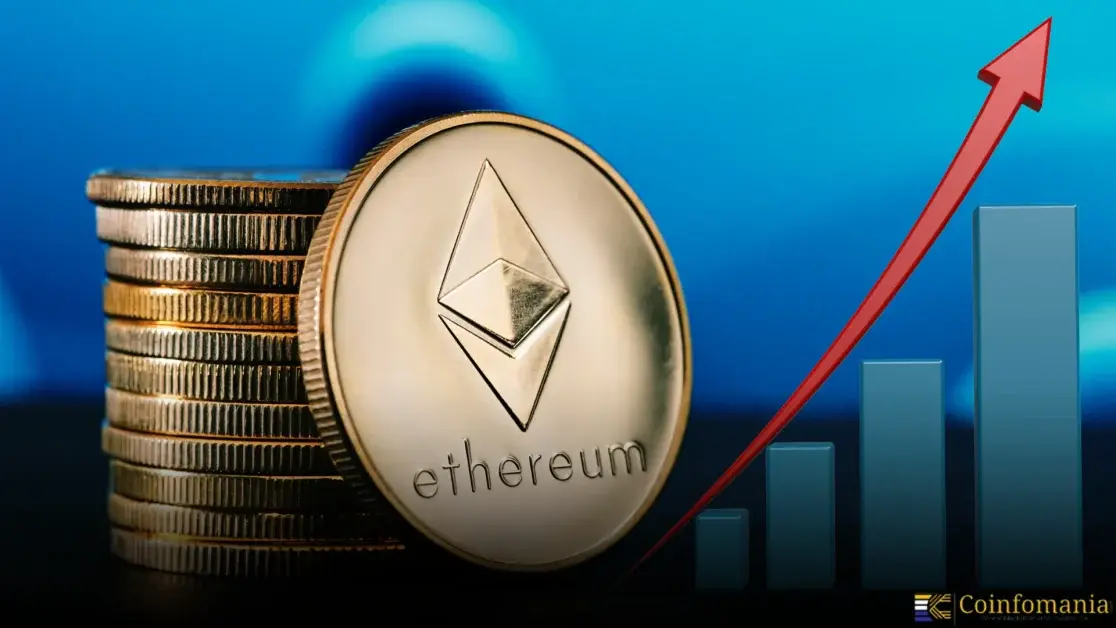
Credit from : Coinfomania
What’s Ahead for Ethereum?
So, where does that leave Ethereum over the next few years?
If Buterin’s perspective carries weight, we could see projects tighten treasury policies, reduce leverage, and diversify assets. That might not deliver the jaw-dropping growth some investors expect, but it would build resilience.
If Lee’s view dominates, Ethereum could lean into its bullish potential, with projects using treasuries aggressively to maximize gains during bull cycles. That path could bring explosive adoption — or, if markets sour, another painful crash.
Most likely, Ethereum’s trajectory will weave between these two paths. Some projects will play it safe, others will push the limits, and the overall ecosystem will absorb both strategies in real time.
Final Thoughts: Striking the Balance on ETH Growth and Risks
Ethereum’s future isn’t about choosing between Buterin and Lee — it’s about acknowledging that both sides capture part of the truth. Growth brings opportunity, but risks are never far behind. Treasuries can be the engine that drives innovation, or the weak point that sparks collapse.
The real question is whether the Ethereum community can learn from past mistakes without stifling ambition. Because at the end of the day, the story of ETH growth and risks will be the story of how this ecosystem balances optimism with caution — and whether it can mature without losing its edge.