
Top 10 Green & Sustainable Crypto Projects in 2025: Building an Eco-Friendly Blockchain Future
Top 10 Green Crypto: The rise of green crypto has become one of the most pressing conversations in blockchain. As the world pushes for climate-conscious solutions, cryptocurrencies—often criticized for their heavy energy use—are adapting to a new reality. Instead of relying on energy-intensive Proof-of-Work models, more projects are turning to eco-friendly consensus mechanisms, carbon offsetting, and partnerships in the renewable sector.
In 2025, sustainable crypto isn’t just a niche—it’s a defining benchmark for mass adoption. From institutional investors with ESG mandates to everyday users concerned about climate change, the demand for sustainable crypto is reshaping the industry. This list brings together the Top 10 Green & Sustainable Crypto Projects in 2025, each playing a role in building a low-carbon blockchain future.
Top 10 Green Crypto : Criteria for Selection
Not all projects labeled “green blockchain” truly deliver measurable impact. To select these top 10, several factors were considered:
- Energy efficiency, measured by kWh per transaction
- Use of renewable energy and carbon offset programs
- Governance structures aligned with sustainability goals
- Real-world applications, scalability, and partnerships with climate-tech innovators
1. Top 10 Green Crypto: Cardano (ADA)

Source: Capital.com
Cardano continues to lead conversations around eco-friendly crypto thanks to its Ouroboros Proof-of-Stake protocol. The network’s energy consumption is a fraction of Bitcoin and Ethereum’s older PoW models.
Cardano also stands out for its research-first approach, ensuring developments are peer-reviewed and scientifically backed. Beyond the tech, it has committed to sustainability-focused initiatives in Africa, where blockchain is being used to improve supply chains and identity systems in developing regions.
2. Algorand (ALGO)

Source: Coin Market Cap
Algorand is often highlighted when people ask, “What is Algorand’s carbon footprint?” The answer is impressively low. Since 2021, Algorand has been a certified carbon-negative blockchain. Its Pure Proof-of-Stake system drastically reduces energy use, while partnerships with ClimateTrade ensure carbon offsets are verifiable on-chain.
In 2025, Algorand continues to expand in green finance and ESG-compliant DeFi projects, making it a strong contender for institutions prioritizing sustainable investments.
3. Hedera (HBAR)
Hedera Hashgraph operates differently from traditional blockchains, using its Hashgraph consensus mechanism, which requires minimal energy per transaction. Reports show its electricity usage per transaction is even lower than mainstream payment networks.
Hedera’s governance council—featuring global enterprises—actively pursues ESG commitments. With tokenized green assets and partnerships in renewable energy, Hedera is carving out a role as an ESG crypto hub for enterprises.
4. Solana (SOL)
Source: Cryptonews
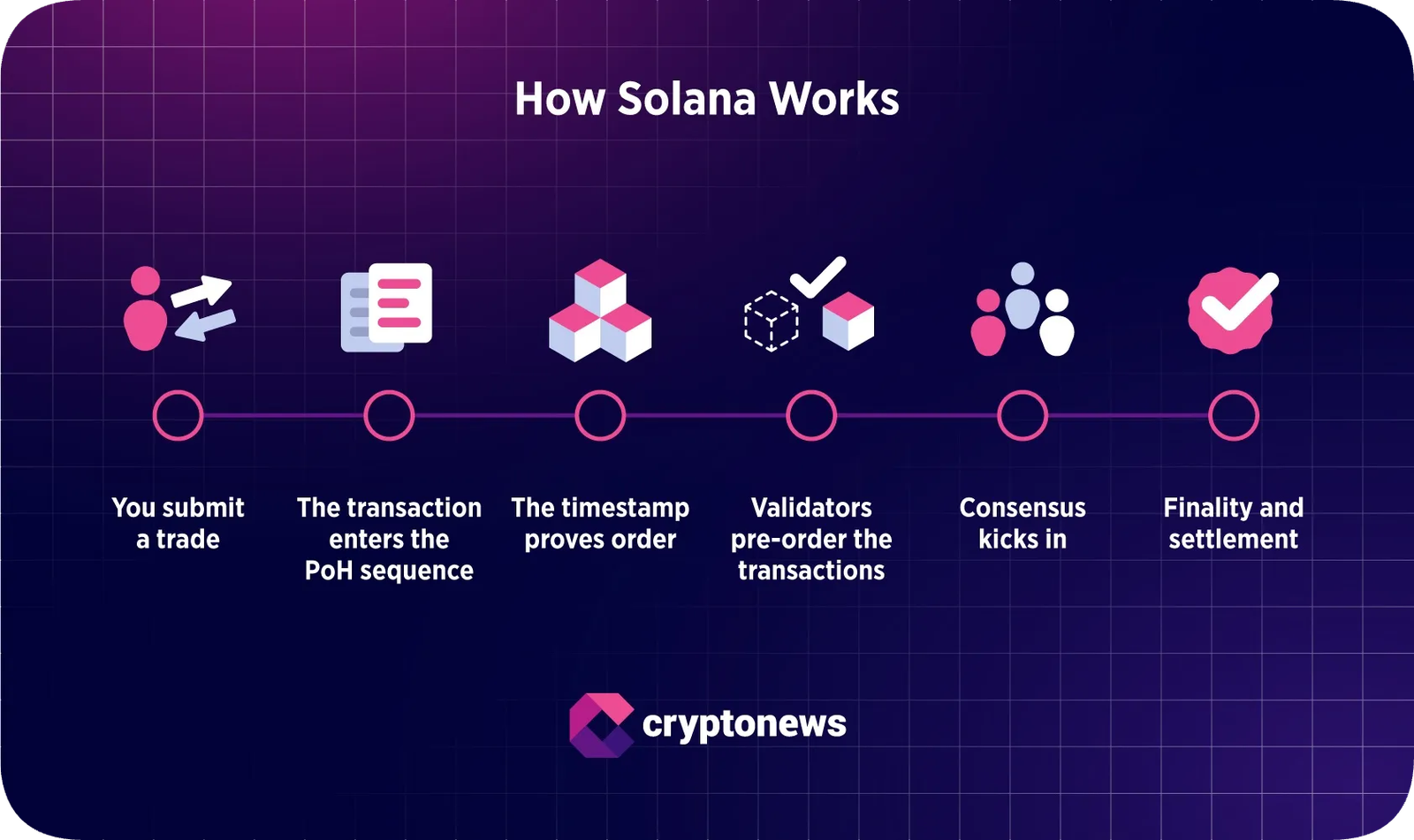
Solana has faced criticism for network outages, but its Proof-of-History plus Proof-of-Stake hybrid has positioned it as one of the most energy efficient crypto platforms at scale. Independent research suggests Solana’s per-transaction carbon footprint is lower than Visa’s, a remarkable claim for a high-throughput network.
In 2025, Solana is doubling down on carbon neutrality efforts while maintaining its strong presence in NFTs and DeFi. The conversation “Is Solana an eco-friendly blockchain?” is increasingly answered with a confident yes.
5. Polkadot (DOT)

Source: Binance Academy
Polkadot’s parachain model allows multiple blockchains to share security, which reduces overall energy demand compared to isolated chains. Its Proof-of-Stake consensus enhances efficiency, while projects like Energy Web Chain integrate sustainability directly into the ecosystem.
Polkadot’s governance model also opens the door for community-driven sustainability initiatives, signaling how decentralized networks can align with global climate goals.
6. Stellar (XLM)

Source: Beincrypto
Stellar’s lightweight consensus protocol has long been known for low energy crypto transactions. Its design focuses on financial inclusion, making cross-border payments fast and affordable while keeping environmental impact minimal.
A notable development is Stellar’s integration into carbon credit solutions, helping organizations track and trade carbon offsets more transparently. This balance of climate action and social good gives Stellar a unique space in the sustainability conversation.
7. Tezos (XTZ)
Source: BlockChain News
Tezos is often cited as one of the most sustainable crypto platforms due to its Liquid Proof-of-Stake consensus and ability to self-upgrade without hard forks. This avoids the resource-heavy process of repeated network overhauls.
Its NFT ecosystem has attracted artists seeking greener alternatives to Ethereum. Sustainability reports in 2025 highlight Tezos as consuming far less energy annually than even traditional financial systems.
8. Avalanche (AVAX)

Source: Gemini
Avalanche combines scalability with sustainability. Its Proof-of-Stake consensus and subnet architecture allow applications to optimize resources efficiently. This architecture reduces wasted energy while supporting large-scale dApps and DeFi protocols.
The project has also joined ESG tokenization initiatives, signaling its role in bridging blockchain with real-world climate finance.
9. Top 10 Green Crypto: Nano (XNO)
Nano remains one of the most eco-friendly crypto projects thanks to its block-lattice architecture. Unlike most blockchains, Nano transactions are feeless, ultra-fast, and require near-zero energy.
Community-driven initiatives in 2025 emphasize Nano’s role in low energy crypto for micropayments, providing a simple, sustainable alternative to both traditional banking and energy-heavy chains.
10. Chia (XCH)
Chia’s Proof-of-Space-and-Time consensus positions it as an eco-conscious alternative to mining-heavy PoW systems. Instead of using electricity for computation, Chia relies on storage.
However, debates around e-waste from hard drives have been a sticking point. By 2025, Chia is improving efficiency through partnerships with sustainable storage providers, making it a greener option than its early critics feared.
Top 10 Green Crypto: Comparative Snapshot of Sustainability
Across these 10 projects, energy use per transaction is dramatically lower than legacy PoW networks like Bitcoin and Ethereum. While some focus on carbon neutrality (Algorand, Hedera, Solana), others redefine infrastructure itself (Nano, Chia). Together, they demonstrate the variety of approaches within the green blockchain movement.
Challenges and Criticisms
Not every green crypto claim holds up under scrutiny. Concerns of “greenwashing” remain, with some projects overstating their sustainability. Proof-of-Stake systems, while energy-efficient, also raise worries about centralization. And for Proof-of-Space models like Chia, the environmental trade-offs of hardware remain unresolved.
Future Outlook
Looking ahead, sustainable crypto will likely integrate further with renewable energy markets. Carbon credit tokenization, ESG-focused DeFi, and institutional adoption driven by climate commitments are all shaping the next phase. By 2030, green crypto may no longer be a niche but the default standard for blockchain.
Conclusion – Top 10 Green Crypto
The Top 10 Green & Sustainable Crypto Projects in 2025 highlight how blockchain can innovate without compromising the environment. From Cardano’s academic rigor to Nano’s minimalist design, these projects showcase diverse pathways toward sustainability.
As crypto continues to mature, the demand for green crypto will only grow—driven by climate goals, ESG frameworks, and user awareness. In this shift, sustainability is no longer optional. It’s the future standard for blockchain technology.